120 V / 12 A
1.44 kWLevel 1
Can suit lighter daily driving and longer time at home, with an appropriate dedicated circuit.
9.3hours to replace
the day’s driving
the day’s driving
Within your 10-hour window
Home charging should fit your car, your daily miles and the place you park. helps you plan an installation around all three.
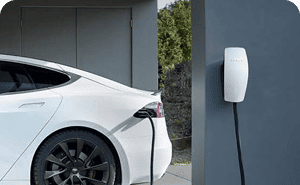
Slide to your daily miles and compare how Level 1 and Level 2 charging keep up overnight.
Example: 40 daily miles with about 10 hours parked at home. Enable JavaScript to try your own miles.
We assume about 10 hours parked at home overnight and a typical EV.
Day’s driving replenished in 9.3h
Day’s driving replenished in 1.7h
Colored span = charging time needed. The end marker is your departure. Example starts charging as soon as you plug in.
Can suit lighter daily driving and longer time at home, with an appropriate dedicated circuit.
Within your 10-hour window
More energy in less time, with a dedicated installation planned around the home and vehicle.
Within your 10-hour window
Bars compare charging time with 10 hours parked at home.
Examples only: real charging speed depends on the car, charger, circuit and battery. We confirm what fits your home in the assessment.
Charger placement is just the beginning. Circuit capacity, cable routing and your vehicle all belong in the same conversation.
A charger does not automatically mean a new electrical panel. We assess available capacity and appropriate load-management options before recommending changes.
Your vehicle model, a photo of the closed electrical panel, and a photo of where you park. Leave electrical covers closed.
Get EV Charging ↗We connect the practical details so your charging setup works with the way you live.
Review your driving, vehicle charging capability, parking layout and electrical panel.
Confirm the charging rate, equipment, wiring route, capacity needs and required approvals.
Complete the agreed installation and commissioning, then walk through operation and any scheduling features.
A few details make the charging decision a lot clearer.
Explore all FAQs ↗Not everyone does. Level 1 may meet lighter daily driving needs when an appropriate dedicated circuit is available and the vehicle is parked long enough. Level 2 can suit longer drives or shorter charging windows. Your routine and vehicle determine the fit.
That is determined by an electrical assessment. Some homes have enough available capacity; others may benefit from an appropriate load-management solution or require an upgrade. We explain the options for your installation.
Yes, with equipment rated for outdoor use and a suitable installation. We consider mounting, wiring, cable management, weather exposure and the parking arrangement.
The connector, vehicle charging capability and charger specifications need to match. Tell us the exact vehicle model and any planned future vehicle so we can review suitable equipment and manufacturer requirements.
Home solar may contribute energy while it is generating and the car is charging. How much depends on generation, other household loads and charging settings. Charging during an outage requires a specifically designed, compatible backup system.
Background: U.S. Department of Energy: home EV charging (opens in a new tab).
Tell us what you drive and where you park. We’ll help you plan the charging setup that fits your home.
Get EV Charging